 Steel
SteelWhat are tool grade steels and which one should you choose for your job?
When a tool cuts, stamps or shapes another metal, the steel it is made of decides how long it lasts and how well it works. That is where tool grade steels come in. In this guide we explain in plain words what they are, how they are grouped and how to choose the right one for your job.
What is a tool grade steel?
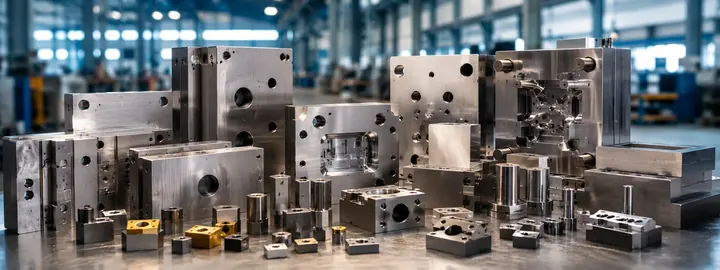
These are the steels used to make the tools that work other materials: dies, punches, knives, molds, drawing dies and gages. The work is very demanding, so they must keep their edge and shape despite wear, impacts or heat. To achieve this, they strike a balance between hardness (wear resistance) and toughness (not breaking suddenly).
They contain elements such as chromium, molybdenum, vanadium or tungsten, and reach their final hardness through heat treatment. Unlike machinery-grade steels (for machine parts) or carbon steels (for structures), these are made to cut, form and shape.
They are grouped by type of work
The easiest way to choose is to think about what the tool is going to do. Tool grade steels fall into five families:
- Cold work: they cut, die-cut and punch cold metal. Wear resistance matters most. Grades: D2, A2 and O1.
- Impact resistant: withstand heavy blows without breaking. Grade: S7.
- Hot work: they work with hot metal (forging, casting) and withstand thermal shock. Grades: H13 and 1.2714.
- High speed (HSS): they cut at high speed and keep their edge even when hot. Grades: M2 and M4.
- For plastic molds: designed for injection molds, with good polishability. Grades: P20, P20+Ni and 420.
First define the job (cold cutting, impact resistance, hot work, high-speed cutting or plastic molding) and the steel family nearly chooses itself.
The grades we carry
| Grade | Family | Ideal for | Round bar | Plate |
|---|---|---|---|---|
| D2 | Cold work | Dies, punches, knives | 1/8" a 10" | 1/8" a 10" |
| A2 | Cold work | Dies, punches, gages | 1/4" a 2 1/2" | 1/4" a 8" |
| O1 | Cold work | Dies, gages, knives | 1/4" a 2 1/2" | 1/4" a 10" |
| S7 | Impact | Punches and parts that take impact | 1/4" a 2 1/2" | 1/4" a 10" |
| H13 | Hot work | Forging dies, die casting molds | 1/2" a 12" | 3/8" a 14" |
| 1.2714 | Hot work | Forging dies and large dies | 6" a 12" | 4" a 10" |
| M2 | High speed | Drill bits and knives | 1/4" a 3" | 1/4" a 4" |
| M4 | High speed | High-wear knives and drills | 1/4" a 3" | 1/4" a 4" |
| P20 | Plastic mold | Injection molds | 1/2" a 6" | 3/4" a 10" |
| P20+Ni | Plastic mold | Large injection molds | 1/2" a 6" | 1" a 12" |
| 420 | Stainless tool steel | Molds, cutlery, instruments | 1/4" a 2" | 1" a 10" |
Cold work: D2, A2 and O1
These are the steels for cutting and blanking metal cold. D2 is the most wear resistant, ideal for high-volume production (dies, punches, knives), and it air hardens, so it distorts very little. A2 gives a good balance between wear resistance and toughness, perfect when there is also some impact. O1 is general purpose, easy to machine and widely used in tools and gages; it oil hardens.
S7: when there are impacts
The S7 is built to withstand impact. It is the choice for punches, forging tools and parts that take heavy blows without chipping. It gives up some hardness in exchange for high toughness, and it air hardens.
Hot work: H13 and 1.2714
H13 is the king of hot work: it withstands thermal shock and is used in die casting molds, forging dies and demanding plastic molds. 1.2714, a nickel steel, is very tough and handles large sections, ideal for forging dies and good-sized punching dies.
High-speed (HSS): M2 and M4
High-speed steels cut fast and hold their edge even when the tool heats up. M2 is the general-purpose HSS for drills and blades. M4, with more vanadium, resists abrasive wear much better, ideal for long-life blades and cutting tools.
For plastic molds: P20, P20+Ni, and 420
P20 comes ready to use (pre-hardened) for making injection molds, with good machinability and good polish. P20+Ni adds nickel for large molds, with greater homogeneity in thick sections. 420 is stainless: it resists corrosion and takes a fine polish, ideal for molds for engineering plastics, cutlery and instruments.
Air or oil quenching: why it matters
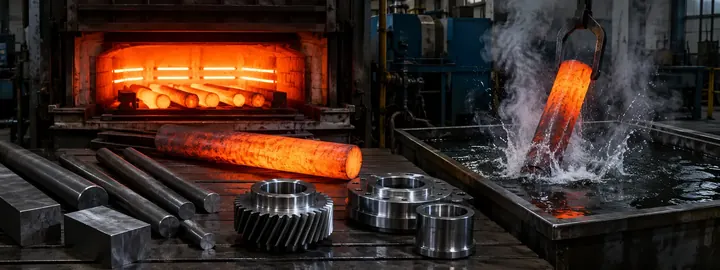
Heat treatment determines the final hardness and also how much the tool distorts. Air-hardening steels (such as D2, A2, or S7) distort less, which is key in precision tooling; others harden in oil (such as O1 or M2). Choosing a grade that suits your geometry avoids rework from distortion.
How to choose the right grade in 4 steps
- Define the job. Does the tool cut cold, take impact, work hot, cut at high speed or mold plastic?
- Does wear or impact rule? If wear rules, go with D2 or M4; if shock rules, S7 (or A2 for a middle ground).
- Need precision? Prefer air-hardening steels (D2, A2, S7) so the tool distorts very little.
- Define the size and form. Bar or plate, and whether you need it cut or faced to size.
Before ordering your steel from us, have on hand
- What tool you are going to make (die, punch, mold, blade…)
- The job: cold cutting, impact, heat or high speed
- What matters more: wear resistance or toughness
- Target hardness, sizes and whether you want it as bar or plate
Why buy your tool grade steel at NAT MAC?
We have been supplying tool steel to industry for more than 54 years and work with ISO 9001 certified quality. We don't just sell you the material: we help you choose the right grade and deliver it ready for your process.
- Wide catalog: D2, A2, O1, S7, H13, 1.2714, M2, M4, P20, P20+Ni, and 420
- Round bar and plate in an extensive range of sizes
- Cut to size
- Advice on choosing the right grade and treatment
- Backed by ISO 9001 certified quality
Tell us what tool you will make and how it works, and we will help you choose the right tool grade steel, with the size and cut you need. Request your free quote.
Sources: NAT MAC Steel data sheets and catalog; ASTM International (ASTM standards); Total Materia, Introducción al sistema de designación SAE-AISI; ASM Handbook Vol. 4A, Steel Heat Treating Fundamentals and Processes.