 Steel
SteelWhich stainless steel should you choose? 304L, 316L and 420 explained
Stainless steel is the kind that withstands moisture and weather without rusting: that is why you see it in sinks, tanks, railings and kitchen equipment, where ordinary steel would fill up with rust. But “stainless” is not just one steel, and choosing the wrong one gets expensive. Here we explain, in plain terms, the three you will use most (304L, 316L and 420) and how to tell which one is right for you.
What is a stainless steel?
Ordinary steel rusts when the iron it is made of combines with oxygen and moisture; that is the good old rust. Stainless steel avoids that problem thanks to chromium. With enough chromium, a protective layer forms on the surface that is so thin you cannot even see it, and it re-forms by itself if scratched. That self-repairing layer is what keeps the part rust-free.
Carbon also counts, but the opposite of what many think: if the steel has a lot of carbon, that carbon “steals” part of the chromium and leaves less chromium to protect the surface. That is why, in stainless steels, the less carbon, the better they resist rust (you will see this below with the “L” grades).
Not all stainless steels behave the same; they are divided into families. At NAT MAC we carry the two most widely used: the austenitic grades (304L and 316L) and the martensitic grade (420). Knowing which one you fall into is half the decision.
Austenitic or martensitic: the first decision
The practical difference between the two families is simple:
- Austenitic (304L and 316L): these are the classic stainless steels. They resist rust very well and are easy to weld and bend, but they cannot be hardened by quenching. They are for tanks, piping, structures, railings and everything in the food industry.
- Martensitic (420): this one does harden with quenching, so it holds an edge and resists wear. In return, it is less rust-resistant. It is the stainless steel used for knives, molds and instruments.
If what you want is rust resistance and weldability, it is an austenitic (304L or 316L). If you need an edge or hardness, it is 420.
304L vs 316L: the detail that changes everything
These two look so alike that you can't tell them apart at a glance. The difference is one ingredient: molybdenum. 316L has it and 304L does not. And that molybdenum is exactly what gives 316L its resistance to salt and chlorides.
So the key question is just one: will the part be near the sea, in a chemical environment or in contact with salt or chlorinated water? If the answer is yes, it is 316L. If not, 304L is more than enough.
Do not pay for 316L out of habit or put in 304L just to save money: if salt or chlorides are involved, it is 316L; if not, it is 304L.
The stainless steels we carry
| Grade | Type | Ideal for | Round bar | Plate |
|---|---|---|---|---|
| 304L | Austenitic (Cr-Ni) | Tanks, structures, food industry | 1/8" a 12" | 1/8" a 2" |
| 316L | Austenitic (Cr-Ni-Mo) | Marine, chemical and coastal environments | 1/8" a 12" | 1/8" a 2" |
| 420 | Martensitic (hardenable) | Cutlery, molds and instruments | 1/4" a 4" | 1" a 10" |
304L: the general-purpose grade
It is the most widely used stainless in the world, and for good reason: it resists rust very well at the best price. It is the one you choose when there is no salt or harsh chemicals involved: sinks, work tables, structures, railings, piping and food equipment.
316L: for salt and chemical environments
The molybdenum in 316L protects it from salt, which gradually pits and corrodes steel. It is the one you need on the coast, near the sea, in chemical or pharmaceutical plants and in equipment with very salty water or chlorine. It costs a little more, but there that extra pays for itself: it keeps the part from failing early.
420: the stainless steel that does harden
420 is different: it can be hardened by quenching, so it takes an edge and withstands wear. It resists rust less than 304L or 316L, but it takes a very good polish. It is the traditional material for cutlery, plastic molds and instruments.
Why the “L” matters
The “L” in 304L and 316L means it has low carbon, and that helps in two ways. First, it leaves more chromium to protect the surface. Second, and most important: it welds better. When a higher-carbon stainless is welded, the area next to the weld can weaken and start to rust over time. With low carbon that does not happen, so if your part will be welded, the “L” grades are the safe choice.
How to choose the right stainless steel
- Salt, chlorides or chemicals present? If so, it's 316L. If not, 304L is more than enough.
- Need an edge or hardness? Then it's 420.
- Will the part be welded? Go with the low-carbon versions (304L or 316L).
- Define the size and form. Bar or plate, and whether you want it cut to size.
Before ordering your stainless steel from us, have on hand
- Where the part will work (indoors, outdoors, on the coast, in a chemical plant)
- If it will be in contact with salt, chlorides or chlorinated water
- Whether it needs an edge/hardness or just rust resistance
- Whether it will be welded, plus the dimensions and whether you want it as bar or plate
Why buy your stainless steel at NAT MAC?
We have been supplying steel to industry for more than 54 years and work with ISO 9001 certified quality. We help you choose the right grade and deliver it ready for your process.
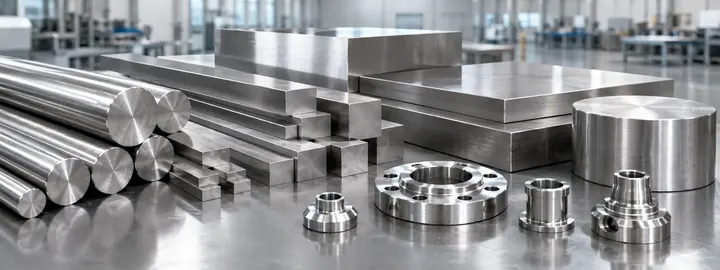
- 304L, 316L and 420 in stock in round bar and plate
- Bar up to 12" diameter in austenitic grades
- Cut to size
- Advice on choosing between 304L, 316L and 420
- Backed by ISO 9001 certified quality
Tell us where your part will work and whether it will be welded, and we will help you choose the right stainless steel, with the size and cut you need. Request your free quote.
Sources: NAT MAC Steel data sheets and catalog; ASTM International (ASTM standards); Total Materia, Introducción al sistema de designación SAE-AISI.