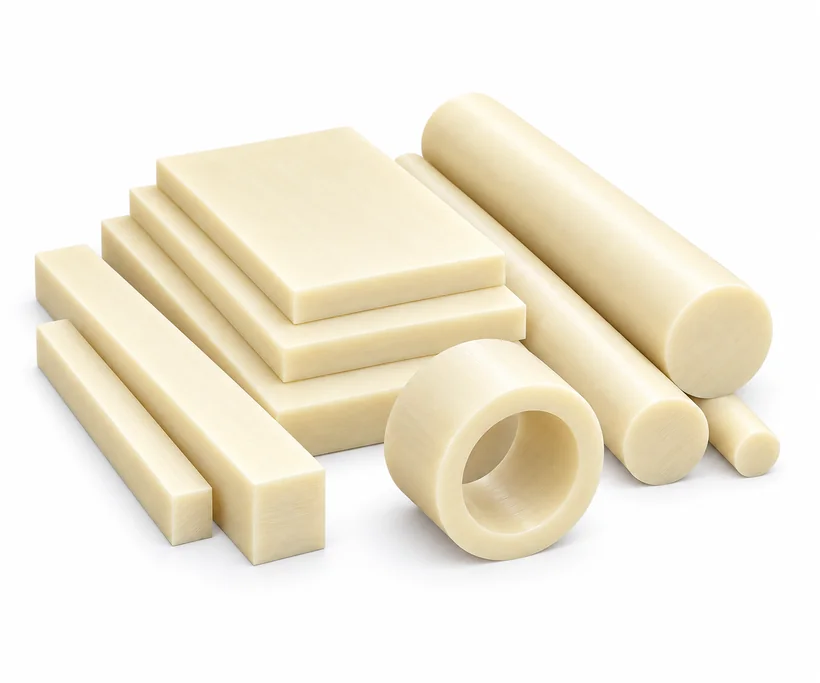

HD Polyethylene PE 300
High-density polyethylene for industrial applications that require good resistance to impact, moisture, abrasion and chemicals. Its low coefficient of friction, light weight and ease of machining make it suitable for manufacturing guides, liners, cutting boards, tanks and industrial components. It does not readily absorb odors and resists stains and corrosion, so it is also used in damp environments and food processing. It is available with a smooth or textured surface and in a wide variety of colors, including two-tone and special options.
| Commercial | International designation | Industrial grade | ASTM classification |
|---|---|---|---|
| HD Polyethylene PE 300 | PE-HD / HDPE | PE 300 | ASTM D4976, group 2, class 3, grade 5 |
| Component | Identification |
|---|---|
| Base polymer | High-density polyethylene |
| Main monomer | Ethylene |
| Repeating chemical unit | (C₂H₄)ₙ / (–CH₂–CH₂–)ₙ |
| Reference density | 0.955 g/cm³ |
| Surface finish | Smooth or rough |
| Compliance | RoHS and REACH |
| Pigmentation | Natural, white, black and various colors |
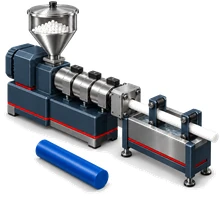 ExtrudedSemi-finished bars or sheets with a smooth or rough finish
 Round bars1" – 17"25.4 mm – 432 mm
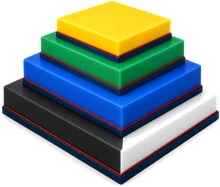 Plates1/4" – 1"6.35 mm – 25.4 mm
- Cutting boards for food
- Guides for light conveyors
- Tank linings
- Water storage tanks
- Chemical tank linings
- Hoppers and silos
- Feed lines and chutes
- Machined industrial parts
- Tie rods and support elements
- Furniture
- Wood replacement
- Stain-resistant surfaces
- Food industry components
- Cosmetic applications
Note: RoHS- and REACH-compliant material. Polyethylene grades (PE 300 / PE 500 / PE 1000) are distinguished by their density and molecular weight. In engineering plastics, composition is identified by the base polymer, the process and its modifications, not by chemical percentages as with steels. The information and values in this data sheet are provided for reference only and may vary depending on manufacturing and application conditions. They do not constitute guaranteed specifications, so use and interpretation of this data is the user's responsibility.