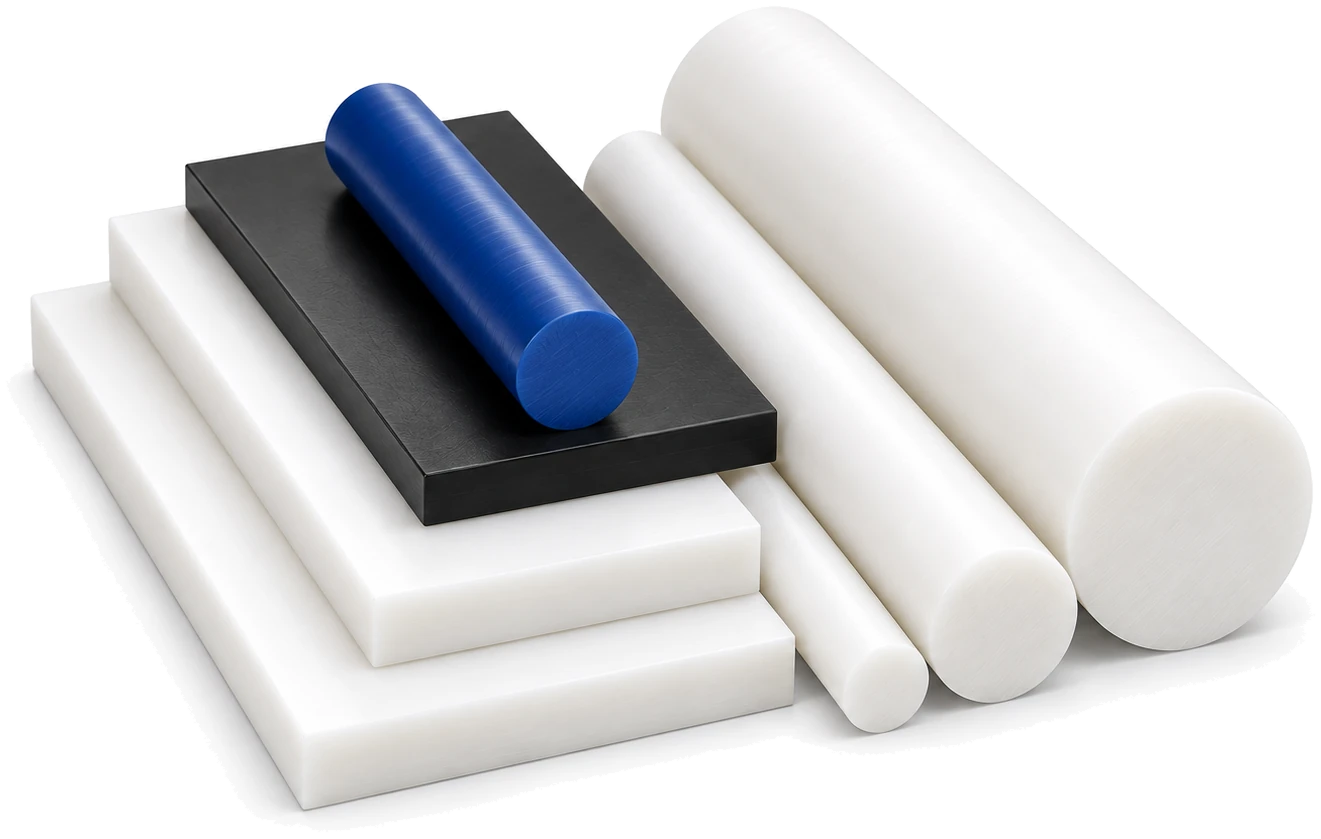
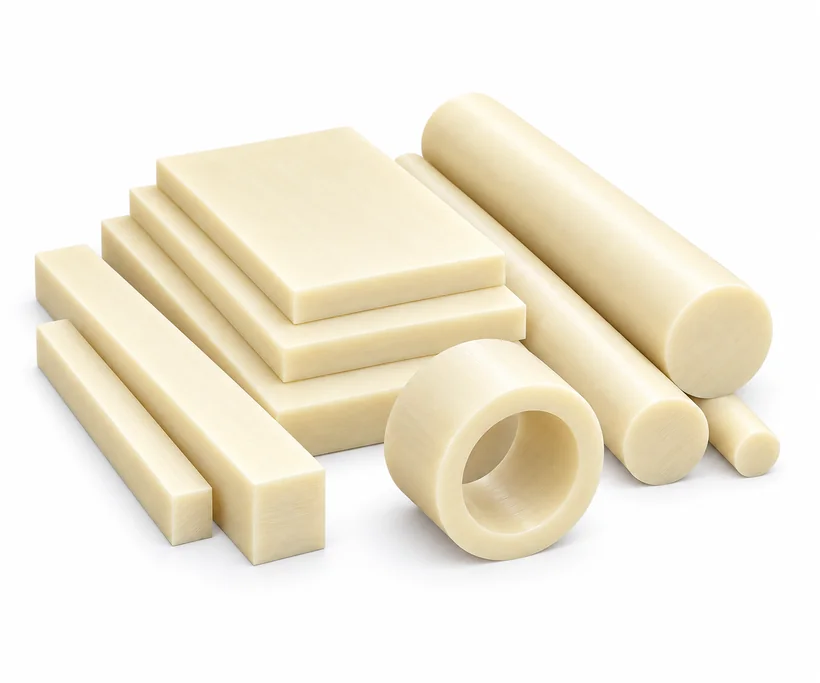
Nylon M natural
Natural engineering nylon made by a casting and caprolactam polymerization process. It offers an excellent combination of mechanical strength, impact resistance, abrasion resistance and sliding properties. Its manufacturing process yields semi-finished stock with low internal stresses and large dimensions, ideal for machining bushings, rollers, pulleys, gears and components subject to load or friction. Thanks to its light weight, ease of machining and corrosion resistance, it can replace aluminum, bronze and other metals in numerous industrial applications.
| Commercial | Technical designation | Cast designation | DIN / EN |
|---|---|---|---|
| Nylon M natural | PA 6 | PA 6 C / PA 6 G | 15860 |
| Component | Identification |
|---|---|
| Base polymer | Polyamide 6 or polycaprolactam |
| Main raw material | ε-caprolactam |
| Repeating chemical unit | (C₆H₁₁NO)ₙ |
| Modification | Natural grade with no declared lubricant filler |
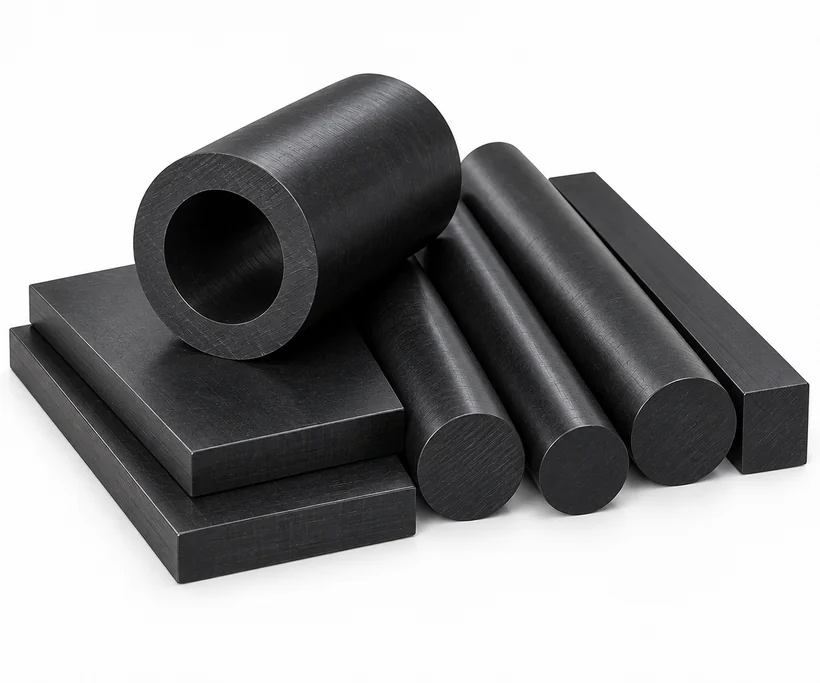
| Pigmentation | Natural/white or black |
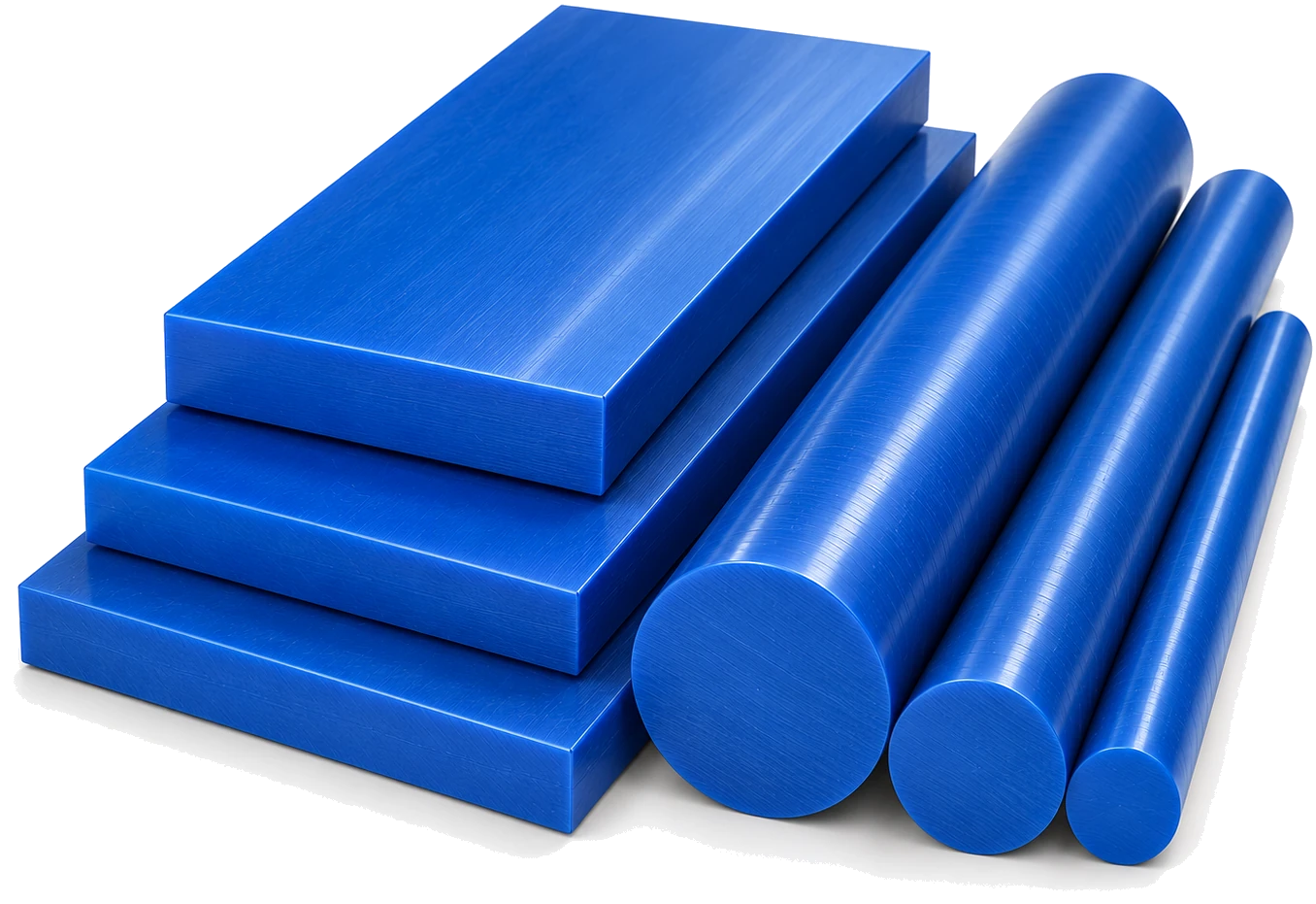
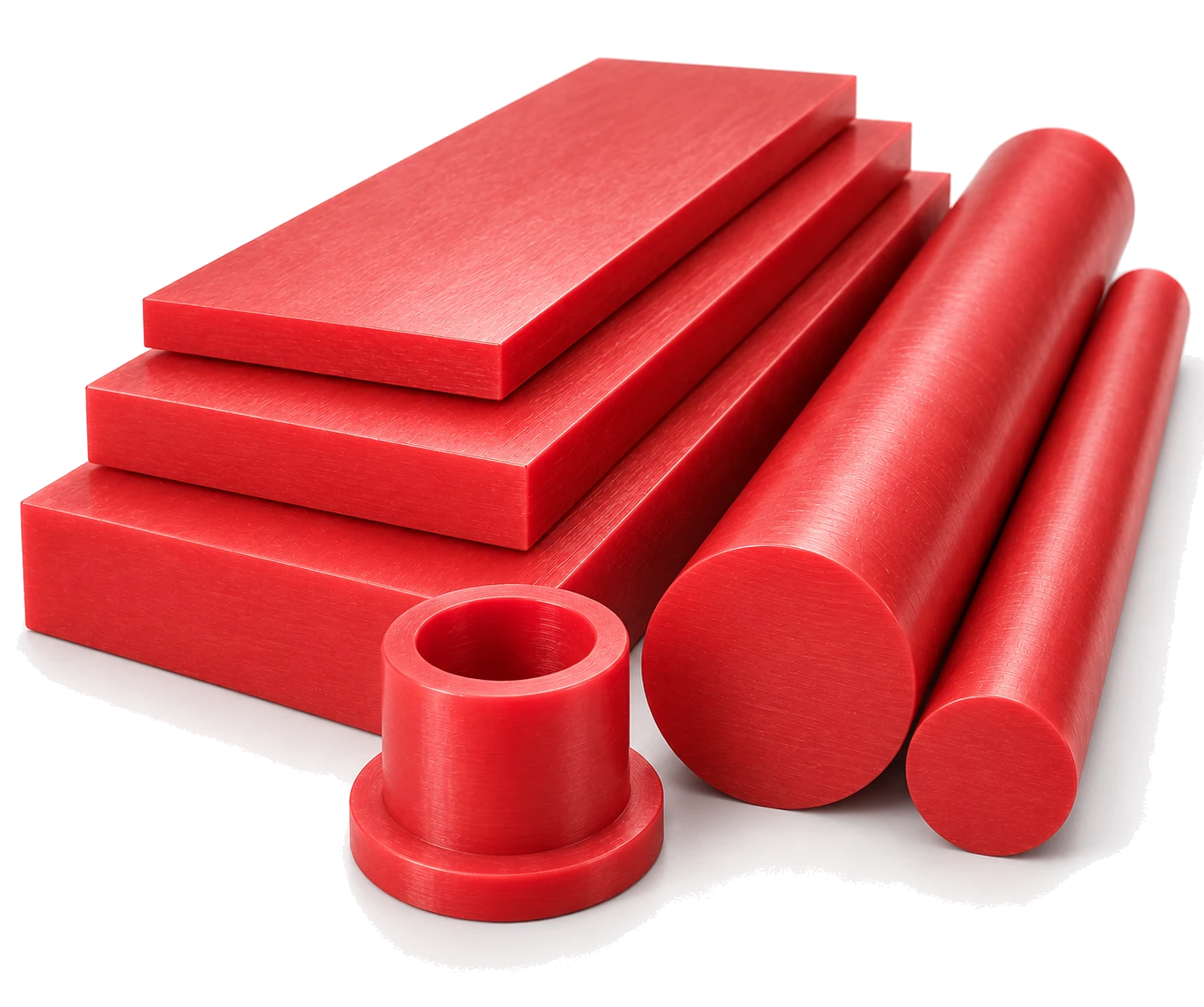
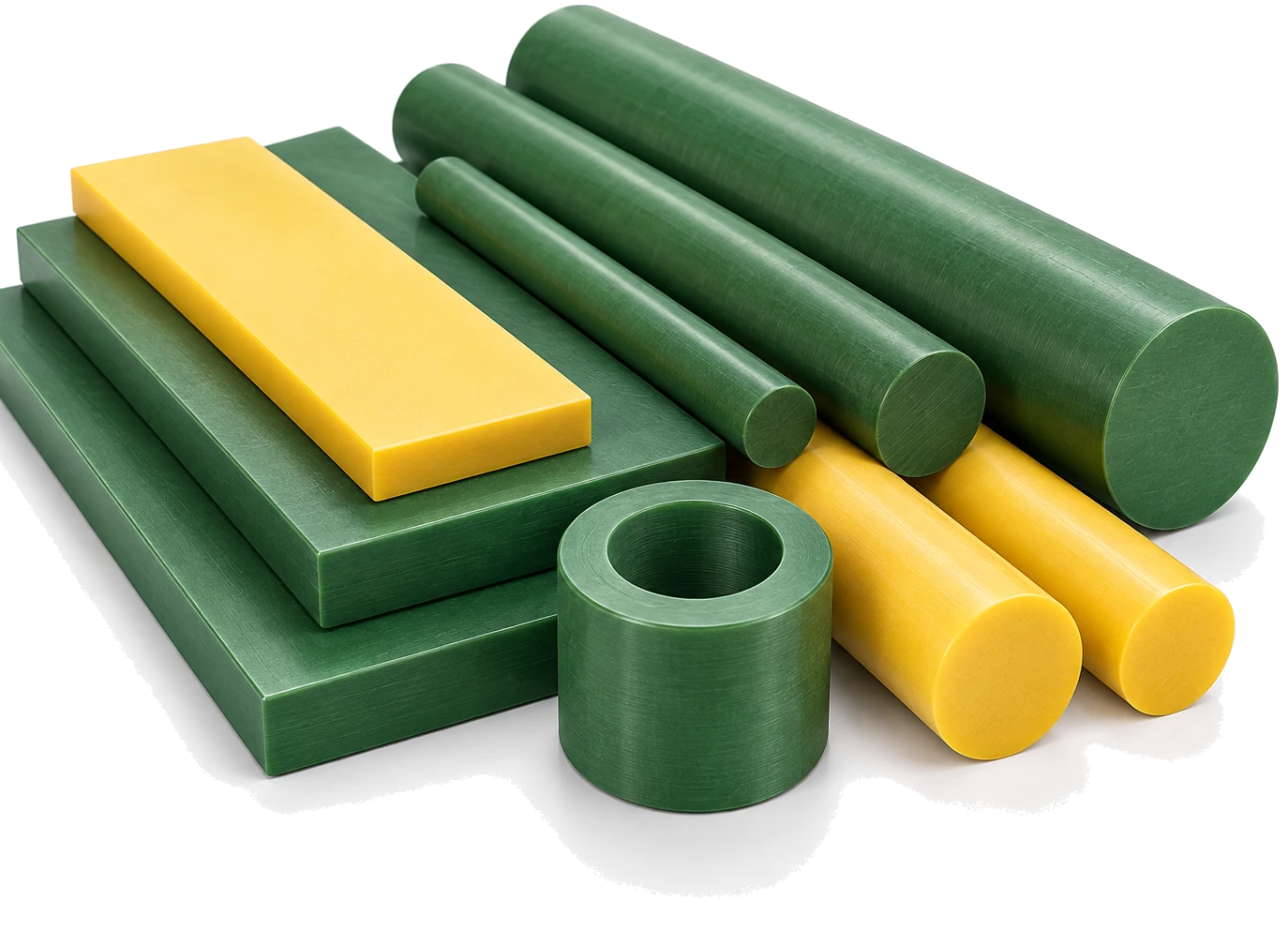
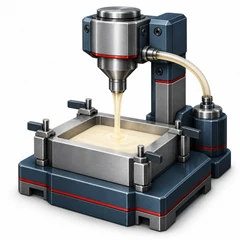 CastSemi-finished stock with low internal stress
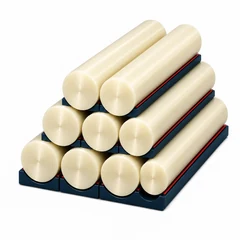 Round bars3/8" – 17"9.5 mm – 432 mm
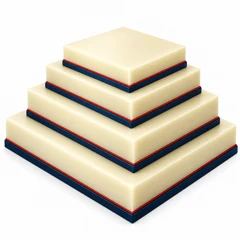 Plates1/4" – 6"6.35 mm – 152 mm
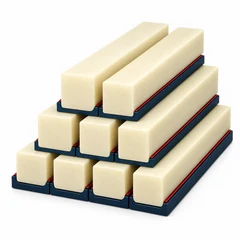 Squares1" – 6"25.4 mm – 152 mm
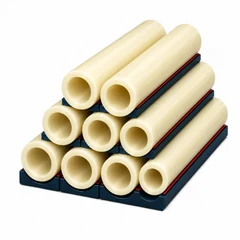 Hollow bars2½"×1½" – 12"×6"63.5×38 – 305×152 mm
- Bushings and sleeves
- Industrial rollers
- Pulleys
- Gears
- Guides and sliding parts
- Wear plates
- Wheels and bogie components
- Components for lifting equipment
- Cable drums
- Star wheels for filling lines
- Worm screws
- Load-bearing replacement parts
Note: PA 6 C and PA 6 G identify cast polyamide 6 (not to be confused with nylon 6/6 or PA 66). In engineering plastics, composition is identified by the base polymer, the process and its modifications, not by chemical percentages as with steels. The information and values in this data sheet are provided for reference only and may vary depending on manufacturing and application conditions. They do not constitute guaranteed specifications, so use and interpretation of this data is the user's responsibility.