 Measurement
What is a vision measuring system and when is it the right choice?
When you need to measure small or complex parts with precision and at high speed, a vision system does the work that would take a long time by hand. In this guide we explain what a measuring vision system is, how it works, when it makes sense and which ones we carry from the Starrett brand.
What is a vision measuring system?
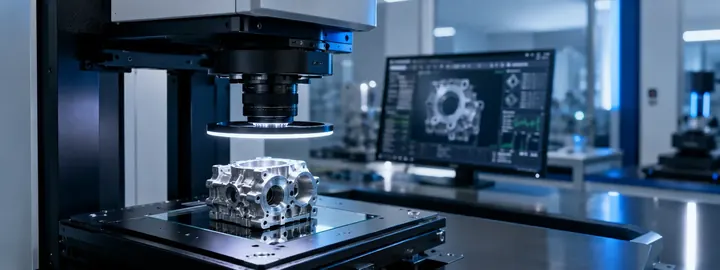
A vision system is an instrument that measures parts with a camera and software, without touching them. The camera captures the image of the part, the software detects its edges and contours and calculates the dimensions automatically, with great precision and speed. It is non-contact measurement, ideal for small, delicate or high-volume parts.
What is it for and what are its advantages?
| Advantage | What does it mean? |
|---|---|
| Measures without contact | Does not touch or deform the part, ideal for soft or delicate material |
| Measures many dimensions at once | Takes dozens of measurements of a part in seconds |
| Fast and repeatable | Gives the same result every time, without depending on the operator's hand |
| Saves and reports | Records results for quality control and traceability |
The vision systems we carry
We carry the Starrett vision systems range, from manual units to high-performance automatic systems. These are the models, under the same name you will find on our website:
| Starrett models | What are they? |
|---|---|
| MVR 300 and MVR 300 FOV | Manual video systems for part measurement |
| AVR 200, AVR 300 and AVR 400 (and their FOV versions) | Automatic (CNC) video systems for production and quality control |
| AVX 550 | Video system with larger range and capacity |
| HDV 250, HDV 400 and HDV 500 | High-definition video systems |
| KMR 200, KMR 200 Mx, KMR M3 and KMR-FOV | Precision vision measurement systems |
Vision system or optical comparator?
Both measure parts by image, but in different ways. The optical comparator projects the part's silhouette so it can be compared or measured manually, and it is usually more economical. The vision system uses a camera and software to measure many dimensions automatically. If you measure few parts and simple contours, the optical comparator is enough; if you need to measure a lot, fast, and with reports, the vision system is the better fit. We cover the difference in the article on optical comparators.
In summary
- A vision system measures parts with a camera and software, without contact
- It is fast, repeatable and measures many dimensions at once
- Ideal for small or delicate parts and for volume quality control
- We carry the Starrett range: MVR, AVR, AVX, HDV and KMR
Why buy your measuring equipment at NAT MAC?
We are a Starrett distributor, one of the most prestigious brands in the world of metrology, with more than 54 years of experience in the industry and ISO 9001 certified quality. We advise you on choosing the right equipment for what you need to measure.
- Starrett measuring equipment for dimensional and quality control
- Advice on choosing the right instrument for your part and process
- Hand tools, vision systems, optical comparators, laser measurement, granite and force testing
- Backed by ISO 9001 certified quality
Tell us what you need to measure and with what accuracy, and we'll recommend the right equipment. Request your free quote.
Sources: NAT MAC Measurement catalog; Starrett (metrology catalogs).