 Steel
SteelWhat is 316L stainless steel and what is it used for? Complete guide
316L stainless steel is one of the most widely used austenitic stainless steels in industry. It is the "big brother" of 304L: with the addition of molybdenum it better resists aggressive environments, chlorides and pitting corrosion. In this guide we explain what 316L stainless steel is, its composition, its corrosion resistance, what it is used for and the sizes we stock.
What is 316L stainless steel?
Low-carbon austenitic Cr-Ni-Mo stainless steel. Molybdenum improves pitting and chloride resistance over 304L, without making the material immune. For chemical and pharmaceutical processes and moderate coastal marine environments.
It is an austenitic steel, that is, nonmagnetic and not hardenable by quenching; its corrosion resistance comes from chromium (16.00 – 18.00%), which forms a passive layer that protects the material, and from nickel (10.00 – 14.00%), which gives it its structure and toughness. The letter "L" means low carbon (0.030 % maximum), which prevents sensitization during welding and maintains corrosion resistance in welded joints. Molybdenum (2 – 3 %) is what sets it apart from 304L: it improves resistance to pitting and chlorides.
Chemical composition of 316L stainless steel
This is the typical composition of 316L stainless steel (AISI/UNS 316L / S31603 / EN-DIN 1.4404 / JIS SUS316L standard):
| Element | Contents | What for? |
|---|---|---|
| Carbon (C) | 0.030 % max. | Low ("L" grade): prevents sensitization when welding |
| Silicon (Si) | 1.00 % max. | Deoxidizer |
| Manganese (Mn) | 2.00 % max. | Stabilizes austenite |
| Phosphorus (P) | 0.045 % max. | Impurity, kept low |
| Sulfur (S) | 0.030 % max. | Impurity, kept low |
| Chromium (Cr) | 16.00 – 18.00 % | Provides corrosion resistance (passive layer) |
| Nickel (Ni) | 10.00 – 14.00 % | Provides the austenitic structure and toughness |
| Molybdenum (Mo) | 2.00 – 3.00 % | Improves resistance to pitting and chlorides |
| Nitrogen (N) | 0.10 % max. | Adds mechanical strength |
Corrosion resistance and properties
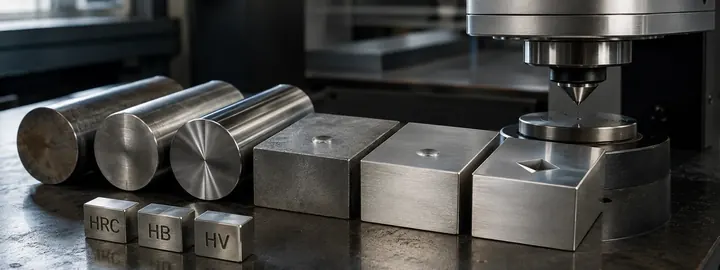
316L is supplied annealed (solution treated) and does not harden by heat treatment because it is austenitic; its hardness increases only when cold worked. In the annealed condition its hardness is around 170 HB (approx. 88 HRB). What matters in this steel is not hardness but its excellent corrosion resistance and weldability.
304L or 316L: which one to choose?
Both are low-carbon austenitic stainless steels and look almost identical. The difference is the molybdenum:
- 304L is the standard choice: excellent for the food industry, water, structures and normal environments.
- 316L adds molybdenum (2 – 3 %), which makes it more resistant to pitting corrosion and chlorides (salt water, marine environments, chemical and pharmaceutical processes). It does not make it immune, but it withstands harsher conditions.
Rule of thumb: if there are chlorides, salt, or chemicals, 316L is the better choice; for everything else, 304L is usually enough and more economical. We also cover this in our article on 304L stainless steel.
What is it for? Applications of 316L
316L stainless steel is mainly used in:
- Pharmaceutical tanks
- Sanitary piping
- Food processing equipment
- Chemical reactors
- Heat exchangers
- Valves and flanges
- Petrochemical equipment
- Water treatment
- Coastal marine components
Forms and sizes we carry
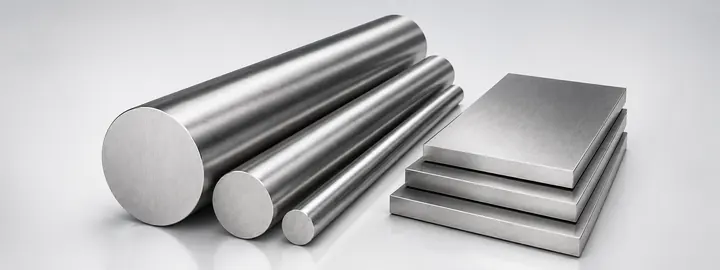
At NAT MAC we stock 316L stainless steel in these forms and sizes:
| Package size | Sizes |
|---|---|
| Plates | 3/16" – 4" (5 – 102 mm) |
| Round bars | Ø 5/16" – 6 1/2" (Ø 8 – 165 mm) |
| Flat bars | 1/8×1 – 1×6 in |
| Hex bars | 1/2" – 2" (13 – 51 mm) |
If you need a particular size, tell us which one and we will gladly source it for you.
316L equivalents and standards
316L stainless steel is also identified by these standards: AISI/UNS 316L / S31603 / EN-DIN 1.4404 / JIS SUS316L. You can see how to read them in our article on steel standards.
In summary
- 316L is a low-carbon austenitic stainless steel ("L")
- Typical composition: Cr 16.00 – 18.00%, Ni 10.00 – 14.00%, Mo 2.00 – 3.00%
- Does not harden by quenching; supplied annealed (~170 HB) and hardens only by cold working
- Better resistance to pitting and chlorides than 304L, thanks to the molybdenum
- We carry it in plates, round bars, flat bars, hex bars, cut to size
Why buy your 316L stainless steel at NAT MAC?
We have more than 54 years of experience as an industrial supplier and ISO 9001 certified quality. We carry quality stainless steel and help you choose the right grade for your application.
- Quality 316L Stainless Steel, backed and traceable
- Material cut to the size you need
- Advice on choosing between 304L and 316L for your process
- Plate, round bar, flat bar and hex bar
- On-time deliveries and competitive prices
Tell us what you are going to make and in what environment the part will work, and we will recommend the right grade and form. Request your free quote.
Sources: data sheet from our NAT MAC catalog (composition, sizes and applications) and public references from the stainless steel industry. Values are for reference and may vary by standard, heat and finish.