 Plastics
Which polyethylene should you use? HD PE 300, HMW PE 500, UHMW PE 1000 and Ceramic UHMW
Polyethylene is the most widely used engineering plastic in materials handling: conveyor guides, hopper liners, cutting boards and wear parts. What changes between one grade and another is the molecular weight, and with it abrasion and impact resistance. In this guide we explain the differences between HD PE 300, HMW PE 500, UHMW PE 1000 and Ceramic UHMW, and which one suits each job.
What is engineering polyethylene?
Polyethylene is a lightweight thermoplastic (density of 0.93 to 0.96 g/cm³), resistant to impact, moisture and chemical agents, with a low coefficient of friction and virtually zero water absorption (0.01%). It does not absorb odors, resists stains and corrosion, and is easy to machine and weld.
The PE 300, PE 500 and PE 1000 grades are distinguished by their density and molecular weight: the higher the molecular weight, the greater the abrasion and impact resistance. Ceramic UHMW is a PE 1000 reinforced with ceramic filler for the most severe wear. All are 100% recyclable, and several grades are available in food-contact grades.
Why choose this family?
Compared with metal parts or other plastics, it offers several advantages:
| Advantage | What does it mean? |
|---|---|
| Lightweight | Up to 8 times lighter than steel; makes parts easier to handle and assemble |
| Resists abrasion and impact | PE 1000 offers the highest abrasion resistance in the family, with 115 kJ/m² Charpy impact strength |
| Does not absorb water | 0.01% absorption: stable in humid environments and in washdown processes |
| Low coefficient of friction | Parts slide easily and reduce noise and maintenance |
| Food safe | FDA-approved grades for the food industry |
The grades we carry
These are the variants available at NAT MAC and what each one is best for:
| Grade | What sets it apart? | Ideal for |
|---|---|---|
| HD Polyethylene PE 300 | Alta densidad (0.955 g/cm³); acabado liso o rugoso; muchos colores | Cutting boards, tanks, linings, light guides and furniture |
| HMW Polyethylene PE 500 | Molecular weight of 0.5 to 1 × 10⁶ g/mol; more impact and wear resistance than PE 300 | Guides for chains, sprockets, tensioners, stops and moderate-wear plates |
| UHMW Polyethylene PE 1000 | Ultra-high molecular weight (4.5 × 10⁶ g/mol); maximum abrasion and impact resistance | Conveyor guides and curves, bearings, gears, scrapers and seals |
| Ceramic UHMW Polyethylene | PE 1000 with ceramic filler; lower friction and greater dimensional stability | Sawmills, steel mills, agriculture and extreme wear under heavy load and high speed |
Technical properties
Reference values taken from our data sheets; they may vary depending on manufacturing and application conditions:
| Property | HD PE 300 | HMW PE 500 | UHMW PE 1000 | Ceramic UHMW |
|---|---|---|---|---|
| Density | 0.955 g/cm³ | 0.96 g/cm³ | 0.93 g/cm³ | 0.96 g/cm³ |
| Yield strength | 27.6 MPa | 28 MPa | 19 MPa | 38 MPa |
| Flexural modulus | 1,379 MPa | 1,300 MPa | 750 MPa | — |
| Hardness | 64 Shore D | 62 Shore D | 60 Shore D | 68 Shore D |
| Izod impact | 159 J/m | 105 kJ/m² | 115 kJ/m² | 159 kJ/m² |
| Service temp. | −73 a 82 °C | −100 a 80 °C | −200 a 80 °C | — |
Available package sizes
| Material | Available forms | Colors | Supply |
|---|---|---|---|
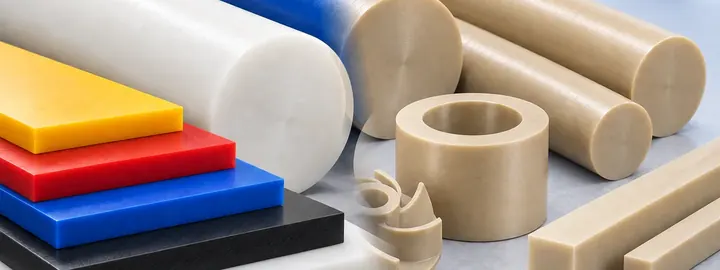
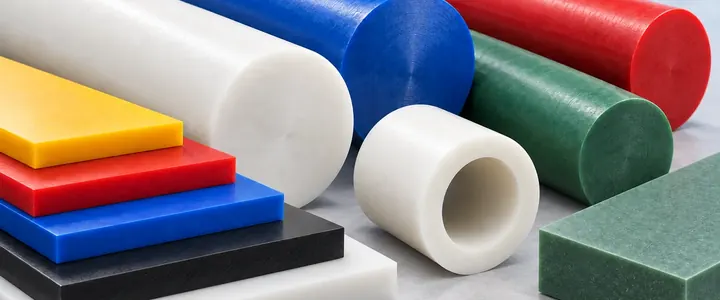
| HD Polyethylene PE 300 | Round bars 1" – 17" (25.4 mm – 432 mm) · Plates 1/4" – 1" (6.35 mm – 25.4 mm) | Natural/white, Black, Red, Blue, Yellow, Green, Beige, Two-tone | Extruded |
| HMW Polyethylene PE 500 | Plates 1/8" – 4" (3 mm – 105 mm) | White, Black, Yellow, Green, Blue, Red, Orange, Brown | Pressed or extruded |
| UHMW Polyethylene PE 1000 | Round bars 1" – 10" (25.4 mm – 254 mm) · Plates 1/4" – 2" (6 mm – 50 mm) | White, Black, Yellow, Green, Blue, Red, Orange, Brown | Pressed or extruded |
| Ceramic UHMW Polyethylene | Plates 1/4" – 8" (6 mm – 200 mm) | Green | Pressed or extruded |
If you need a particular size, tell us which one and we will gladly source it for you.
Where is it used?
Some of the most common applications of these materials in industry:
- Cutting boards for food
- Guides for light conveyors
- Tank linings
- Water storage tanks
- Chemical tank linings
- Hoppers and silos
- Feed lines and chutes
- Machined industrial parts
- Tie rods and support elements
- Furniture
- Wood replacement
- Stain-resistant surfaces
How to choose?
- General use, tanks and cutting boards: HD PE 300 Polyethylene, the most economical and available in the most colors.
- Moderate wear and good cost-benefit: HMW PE 500 Polyethylene, an economical alternative to PE 1000.
- Maximum abrasion and impact resistance: UHMW PE 1000 Polyethylene, the standard for guides, curves and wear parts.
- Extreme wear under high load and speed: Ceramic UHMW Polyethylene, when conventional UHMW no longer lasts.
In summary
- Polyethylene is lightweight, does not absorb water, resists chemicals and slides easily
- PE 300, PE 500 and PE 1000 differ by molecular weight: the higher the molecular weight, the greater the abrasion and impact resistance
- Ceramic UHMW is a PE 1000 reinforced with ceramic for the most severe wear
- Choose by wear level: PE 300 for general use, PE 500 for moderate wear, PE 1000 and Ceramic for high and extreme wear
Why buy your engineering plastics at NAT MAC?
We have more than 54 years of experience in the industry and ISO 9001 certified quality. We carry all ten families of engineering plastics (nylon, polyethylene, acetal, Teflon, polycarbonate, PEEK, PETG, PET, polypropylene and thermosets), each with its own data sheet, and we help you choose the right material for your part, your load and your working environment.
- Material cut to the size you need
- Data sheets with verified properties for each grade
- Advice on choosing the right plastic for your load, temperature and environment
- Stock in bars, plates and bushings with delivery throughout Mexico
- Backed by ISO 9001 certified quality
Tell us what part you'll make, the conditions it operates in and the sizes you need, and we'll recommend the right material. Request your free quote.
Sources: NAT MAC Engineering Plastics data sheets and catalog; TecnoQuim (material data sheets); ISO 527-1, Determination of tensile properties; ISO 868, Shore hardness.